
Child Care Is on the Ballot: What the Callais Decision Means for Mississippi Families
The stakes for working families in Mississippi could not be higher. The recent U.S. Supreme Court decision in Louisiana v. Callais has set the stage for a special redistricting session that will shape political representation across our state. While that may sound like a conversation about maps and legal arguments, make no mistake: this is about who has power and who doesn’t. That power determines whether Mississippi families can access something as basic and essential as child care.
A System Already in Crisis
Mississippi’s child care system has been under severe strain since April 2025. Thousands of families remain on the Child Care Payment Program (CCPP) waitlist. Providers are struggling to keep their doors open. Parents are making impossible choices between going to work and staying home with their children.
These challenges didn’t happen by accident. They are the result of policy decisions made by elected officials about funding, priorities, and who gets access to support.
What Redistricting Has to Do With Child Care
Redistricting determines who represents you. When communities are fairly represented, their voices shape policy decisions. When they are not, critical needs—like affordable child care—can be ignored.
The Callais decision raises serious concerns about whether communities, particularly Black and Brown communities in the Deep South, will continue to have a fair opportunity to elect representatives who reflect their lived experiences. If representation is weakened, so is the ability to advocate for:
Sustainable child care funding
Support for providers
Policies that allow parents to work and families to thrive
Child Care Is Infrastructure—and Democracy Is the Foundation
We often talk about child care as workforce infrastructure because it is, but it is also something more: it is a reflection of whether our democracy is working. Because when families cannot access child care, they struggle to participate fully in the economy. When communities cannot access fair representation, they struggle to influence the decisions that shape their lives.
The Path Forward
This moment calls for action—not just from policymakers, but from all of us.
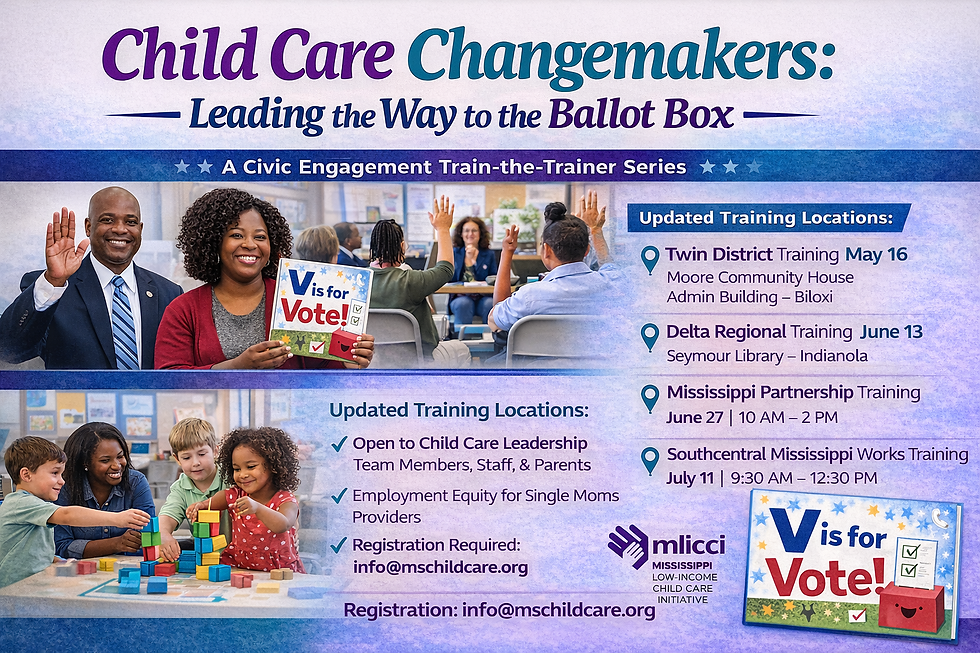
Child care providers, parents, and advocates are trusted voices in their communities. You have the power to:
Educate families about what’s at stake
Encourage voter participation
Connect everyday challenges to policy decisions
As Mississippi enters a special redistricting session and looks ahead to upcoming elections this November, we must stay engaged, informed, and active. The future of child care—and the future of our communities—depends on it.

Comments